Sunday, November 16, 2014

What's In Your Warehouse?


You can bet with the holiday season about to explode the commercial warehouses are stockpiling for whatever Black Friday is about to unleash.  I can't even begin to fathom how huge the warehouses are for Amazon but I'm guessing it's named "Amazon" for a good reason.  And whenever I walk through Costco, it's staggering to see the number of goods available for purchase. Rows upon rows, with shelves so high, small cherry pickers are needed to reach whatever is lurking way up there. These companies store and display their many wares with the intention of moving it along to the consumer and we here in North America have access to all of it...an over-abundance of stuff that we most likely don't even truly need.  


My thought for the week, however, isn't really about retail, but about storing stuff.  We tuck things away on many different levels.  We fill up our garages with a lifetime of collectibles and memorabilia.  We pack out our closets with shoes and clothes.  We hold onto papers thinking we might need them in future and most deceptively, we stuff emotions down into the warehouse of our being.  I'm guilty of all these things as I come from a long lineage of pack rats. Something happened to the depression generation of the 30's that taught them to not waste anything and that most things would have a use (eventually).


So to even address the issue of what's in my warehouse, is coming face-to-face with something I strive to become better at doing-letting go.  What would really serve me is to actually move from my current house into a much smaller location.  Every time I have moved in the past I have undergone major cleansing.  I become ruthless (relative to me, of course) in throwing out clutter that has collected into the corners of my life.  But we love where we live and have been in this one location for 13 years now with the clutter being a persistent reminder of my letting go practice so I guess I'll have to find another way to surrender without changing my address.


Letting go can begin on a real, physical level by sorting through the paraphernalia.  Sort what's to be thrown out, what's to be donated/recycled and what is worth keeping.  We have all heard the drill.  Yet letting go on an emotional level is a whole new level of releasing what is no longer serving us.  It is thought that all of our experiences are held within the cells and memory of our body. Imagine 50 years of experiences being stored within one body...an Amazonian sized, mind-boggling number of experiences.  What happens to the experiences we choose to not face directly?  If we ignore them, won't they just go away?


Well wouldn't that be nice?


One reason why the practice of yoga is so powerful for people is that it's often the first opportunity that they have in a safe environment to begin unpacking Pandora's box.  Something happens as we begin to breathe, stretch and contract our muscles. As we listen to the supportive and directing tones of the teacher we can be led to a place of greater surrender.  Often we don't know what's happening but stuff begins to surface and we begin to confront our emotional baggage.


I first noticed this phenomenon as a personal fitness trainer.  I'd be standing next to someone on an elliptical trainer and as they're heart beat faster, their breathing rate increased and they began to perspire  they would frequently say to me, "You know, I've never told anyone this before, but...".  It didn't just happen once or twice. It happened A LOT!  I began to sense that when someone felt safe and trusted the person next to them, then began to physically move, something would begin to dislodge and baggage would begin to float to the surface.  It was my first full glimpse into the connection between our body, our emotions and our mental states.


Fast forward a few years to the world of yoga and now we have environments with mood lighting, beautiful scents wafting through the air, a teacher with a melodic voice, cushy mats and other props around us.  We feel held, safe and often vulnerable.  Add into this connecting to a deep breath, narrowing focus and getting rid of distraction we now have the perfect environment for stuff to float to the surface.   And this is perfectly okay.


When things are held in our own bodies for years, they form what I've come to call energetic clots.  The life force (prana) becomes stagnant and is reflected through our physical selves in numerous ways via illness, mental agitation, depression, injury, fatigue or a seemingly empty feeling.  Energy is meant to move through us to remove the things that don't serve us and to enforce practices that do.


This unpacking is a natural evolution of our yoga practice.  It comes off in layers, somewhat like an onion which can also bring us to tears.  But in this reveal we begin to remember our connection to our deepest sense of self and tap into the question of, "why am I here?".  I have grown to appreciate this process, not only for myself, but in bearing witness to it through students who step onto the mat.  In that unfolding, we hold each other in a sacred way and allow the space for it to happen. 

As the holiday madness draws near, I hope that I release rather than stock up my own warehouse by having gratitude for all that life offers.

Saturday, November 8, 2014

Are You Joint Savvy?


I'll admit it...I'm an anatomy geek.  I not only love studying anatomy but also teaching it to others.  What I find so incredible is the amazing structure that we...our body. Although each of us is uniquely different, we are all basically assembled in the same way.

Our fundamental structure is that we have about 700 named muscles in the body which makes up about half of our body weight. A typical adult human has 206 bones many of which come together to form joints.  Joints come in a few different varieties and mainly include synovial (e.g. knee, hip, shoulder), cartilaginous (pubis symphysis) and fibrous (sutures in the skull) joints as well as a few others.  When we talk about joints and joint pain we generally refer to synovial joints.   They are the most movable joints in the body and are largely held together via connective tissue forming joint capsules. 


Our skeleton is able to move because of the over 700 muscles that enable it to do so...they need each other for us to ambulate, dance, do yoga or play a sport.  Yet, they act in very different ways and have different expiration dates.  If we stay active, well-nourished and are able to bear our body weight (or move an imposed weight such as a dumbbell), our muscles can stay strong and functional.  But our joints begin to get creakier over time.  We become more brittle and form tears in the connective tissues through wear and tear over a lifetime.  Joints degenerate and can lead to pain, swelling, arthritis and dysfunction.


So how do we optimize the relationship between our muscles, bones and joints?  Isn't all activity a positive step toward maintaining and/or improving health?


We begin by recognizing that we need to be mindful of the impact we put on our joints.  Our muscles respond to overload, as does the density of our bones, but where our bones meet up to form a joint, we need to be kind and careful.  Joints work in a particular range of motion and can be compromised if our biomechanics don't match up with the imposed movements.  A good example is twisting an ankle hiking downhill...our ankle isn't designed to move in that direction under such a downward force.  


We also create movement patterns throughout a lifetime that often reflect a particular posture such as someone who has a career where they've sat for extended periods of time or have had an injury that created a compensated movement pattern that never went back to normal.  It is said that a limping person with a sprained ankle, can embed that movement pattern within three days!  One thing is certain, we are adaptive creatures and sometimes adapt inefficient patterns of moving that stay with us forever unless we begin to explore them.


So if you're now wondering if what you're doing is hurting or helping, ask yourself these questions when exercising:


1.  Does this feel safe in my body?
2.  Will I be okay tomorrow?
3.  Can I move in a pain-free range of motion?
4.  If I do have pain, can I keep moving without dialing up its intensity?


We want to answer "yes" to these questions as well as noticing if what we feel is simply unfamiliar or whether it is painful?  It's okay to have an unfamiliar sensation, but we want to question it if it's eliciting pain.  Pain manifests in the brain and we can learn over time that a past painful movement still feels painful even without any actual injury being present.  Think of someone who has phantom pain in an amputated limb.  So often to feel more comfortable in our body, we need to un-learn what triggered our previous pain.


In yoga, our self-talk is vital to maintaining safety in our practice. Answering "yes" to the above questions, building strength progressively over time and paying attention to the inner voice raises our level of awareness to keep reaping the benefits of our practice over a lifetime.  Many people I have worked with who have recovered from injury try to do too much too soon.  One of my favorite sayings when returning to activity is to "tip toe back, rather than sprint".  Of course this requires additional practices of yoga-patience and discipline (but more of that in another blog post).


So the next time you step onto your mat remember to challenge your muscles and be kind to your joints.  Then we can all live in harmony in the most optimal way!

Saturday, November 1, 2014

This Too Shall Pass


When life gets tough, the tough get going.  Grin and bear it.  Hold on tight, we're in for a rough ride!  When life hands you lemons, make lemonade.  Pull up your big girl pants and get on with it.


This too shall pass.  Ah yes, that's the one that is resonating strongly with me this week.  I am constantly reminded that what I need to learn shows up on my path and this past week presented a few opportunities to remember the transient nature of all things. 


So many moments exist in just one day where things are shifting and changing.  If we were to measure physical parameters like heart rate, brain waves, hormonal fluctuations and blood pressure we'd see consistent variability.  One moment I feel like I'm so incredibly hungry, then starving the next that I grab a bite and the next moment I'm full.  We don't like what we hear on the car radio and in an instant we can change it with a push of a button.  Step outside at 6 am and it's cold, two hours later, you're peeling off your layers because it's now too hot. Last week I could easily bind in a pose, this week it seems just out of reach. Our bodies change...constantly.


If we talk about mental fluctuations, simply try to sit for more than a minute without chasing a thought.  Can you be completely without thought?  They flit across our screen of consciousness like gnats over grass.  Thoughts change...constantly.


So if we know that things are always changing, why do we get so hung up when challenging things happen?  One characteristic of being human is attaching ourselves to thoughts, people and objects.  If we hold onto whatever it is, it can feel as though we're safe and feeling safe is fundamental to our survival.  Being attached is inbred on the most primal level.  As babies, we need to attach to our mothers so we can thrive and this in-born quality begins to expand over time.  We attach ourselves to our jobs, our stuff and our relationships.  We attach ourselves to what we believe is our identity but is it really who we are?


From the yogic perspective, this clinging or attachment is called raga and its partner, aversion, is called dvesha.  These emotional responses can blind us from seeing our own path to freedom.  It's a constant push-pull to holding onto what we want and think is right to avoiding what we don't want.  It can also be reflective of holding expectation and having past experiences that creates these perceptions. What we do know is that when life is constantly shifting it can lead us to feeling that the only thing to do is to hold on tight or to run away.


Part of our practice is to recognize when this is happening and to become radically present which enables us to see what is actually happening in that moment rather than what we think should be happening.  We have expectations that love will last forever, that our jobs are secure and that we will have continued good health, so when these expectations turn out to be false do we crumble or do we see the wisdom that lies within it?


To sit with whatever feeling and sensation arises is a difficult practice but a necessary one if we are to become comfortable with the notion of suffering.  When we sit with what is present, we begin to realize that what lies within which is that unique expression of our warm and radiant being.  What lies within is the same universal energy and light that inhabits all living beings.  What lies within remains unchanged.  


So when the waves of our lives begin to get big and scary, remember that lying beneath the surface is the true expression of who we are.  If we're avoiding our suffering we are sitting upon the surface. If we turn to face our suffering and dive deeply within, we are able remember and connect to the inner calm.  Let go, surrender and release that to which we cling and find true freedom.


Whatever is rocking your world will change.  This too, shall pass.

Sunday, October 26, 2014

Think Small

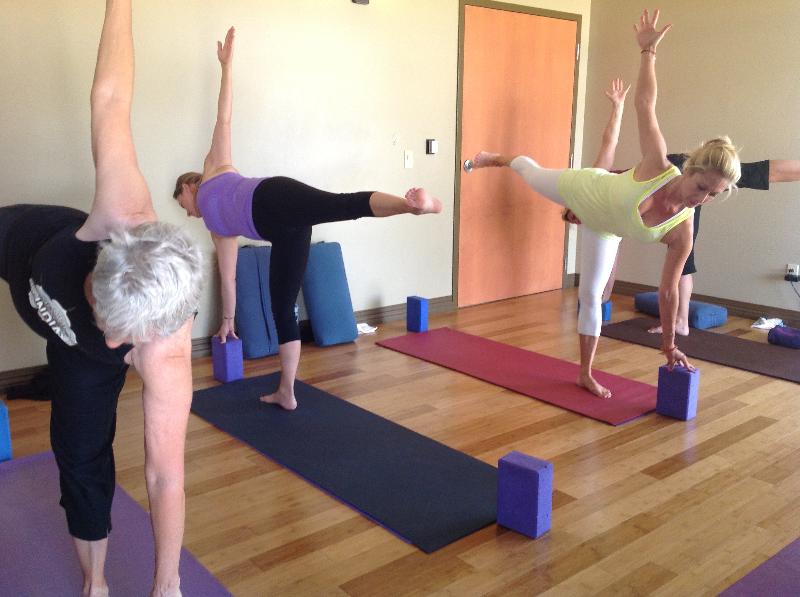
Halfmoon DYT

Back in the 90's I taught literally over a 1,000 aerobics classes.  You name it, I taught it: HiLo, Scuplt, Step, Cardio-Funk, low-impact and Tri-cross training.  For four years I ran the group exercise program at the University of Melbourne which meant 55 classes each week, happening in three different locations with 30 plus instructors. We held classes mainly in the basketball gymnasiums which mean we could fit over 100 people in a class.

 
The music would blast out of the speakers, wore a head microphone and over the four years, I averaged 45 people per class and taught 848 classes.  When I ran the numbers at the end of my tenure, I was blown away by the stats...I had so many people jumping, pumping and grapevining to mixed music tapes featuring Madonna, Kylie Minogue and a Flock of Seagulls.  Of course, I wore the latest attire of a thong leotard over shorts, Reeboks and the occasional wristband.  I had a blast as did the 35,000 plus people that attended.

 
When I taught I would look out into the crowd and only truly notice if someone wasn't keeping up or getting it when they were out of sync with the rest of the group.  At times you'd see people flailing in the back with a "huh?" expression and hope that the group energy would help them get through it.  Often we all did look like a flock of seagulls as we worked various floor patterns across the gym.  It was fun and it improved my teaching skills immensely.

 
When I returned to the United States in 1997, I once again took up teaching group classes, this time, not with such huge numbers but often into the 30's and as I slowly began transitioning from group exercise to yoga, the classes became smaller.

 
What I have learned throughout all of this is that although a large group of people moving, breathing and exercising together can be quite exhilarating and definitely motivating, it wasn't until I was in a semi-private situation that I felt I was truly able to fully teach who was in front of me.  Before that, it was a bit of teaching and a lot of group leading and organization.

 
In creating a program that is largely based on private and semi-private sessions, I began to dive into the nuances and subtleties of a persons practice.  I have the opportunity to truly get to know who my students are as well as their strengths and challenges, if they have injuries, if they've been through a traumatic experience or a life-changing event.  Instead of leading them through a series of poses, I am able to teach them and as a result, their practices have begun to thrive.


I'm not knocking large group classes as I loved teaching them for years, but what I've learned is just how valuable small classes can be.  In a time when yoga is growing in popularity and when people will drop into a class to check out what all the fuss is about, we as an industry offering this practice should want to ensure that everyone's experience leaves them hungry for more.  One example is ensuring people are in the right class to begin with rather than the scenario where a beginner hides in the back of a non-beginners class hoping to eventually catch on.  My personal intention is that every student is safe, that every student gets what they need from a class and that every student feels completely held and seen by the instructor.  Additionally, the smaller scenario allows the instructor the opportunity to connect individually and to pass along their knowledge and do more than simply leading a sequence.

 
Feedback from students in small classes is often around how personalized the classes are and that they're willing to pay a slightly higher than average class fee in order to feel looked after.  The small class experience may not suit everyone and I hope one day that there truly is something for everyone. My experience has been that such settings hold great richness from this intimate experience. Small group classes foster incredible communities of support, love and that in itself is indescribably rich. 

 
Bigger isn't always better, so if you have a small class option in your hometown, maybe try it out and see what all the fuss is about! I promise, you won't be able to hide in the back.

Saturday, October 18, 2014

Be Love


There are times I just need a reminder about how to be in life.  I have this way of over-thinking, over-processing or complicating things that, when stripped back, come down to some simple truths. I had one of those moments this past week after watching a webcast with Ram Dass and Jack Kornfield, two leading teachers in spirituality and authors of many books.  Jack was talking about having been on a month long retreat and what followed was a feeling of radiating love...everyone he came across he felt the simplicity of love oozing from his pores.


Just imagine that all of you who are reading this felt like Jack-walking through your day as a radiant being of love.  Each time you made eye contact with someone, spoke with someone or just walked past a stranger, you had so much love it couldn't be contained within your own self and you were spilling it all over the place.  I'd love to hear the sentence, "Excuse me ma'am, but you just dropped this big bucket of love all over everything...".


We have such conflict and violence in our world, that asking people to "be love" verges on the edge of being an out of touch hippie.  Yet, no better time exists than now to embrace this simple idea.  But how do you tap into love that isn't the romantic version of the word?  How do you spill it out all over the place and not run dry? Are you at peace enough in your own life to offer love to others? Ooooh...now we're getting at something.  It has been said that we can only love others as much as we love ourselves.  This of course begs the question, "How much do I love myself?"  


When I was in junior high school, one of the biggest insults you could throw at someone was to say, "you just love yourself" which implied that you were stuck up, conceited and full of yourself.  If I were to hear this I would shrink like a flower in the hot desert sun, pulling all of my radiance into myself out of the public eye.  And there it stayed for a very long time, which created the feeling that I wasn't love and that if I put it out there, I'd be cut down so don't shine, stay dull. Fortunately, I found the practice of yoga which has helped to erase the old belief that there was something wrong in loving myself.  In fact, it is at the very heart of the practice.


When we bring our body, mind and soul into a good relationship we find a harmonious balance, one which offers a steadiness and ease. When we practice from a place of Ahimsa (non-violence), we are fully in our yoga and this is built on the foundation of love.


It's an ongoing practice as we slip into old habits and beliefs of not being kind to ourselves.  To enhance your connection to love, find a quiet space each day and begin a practice of gratitude.  Begin with being grateful for your body...all of it...including the cranky joints, sagging skin and imperfections that make you uniquely you.  Next, send love to the incredible capacity for yourself to be creative, thoughtful, resilient and willing.  And don't buy into believing all of your thoughts, but let them arise and honor them for mapping what is currently in your consciousness and therefore open to change. And finish your contemplation of love by thanking all that connects you to your higher self, the mysterious realms and unexplained magical moments in your life.  Once you've worked on loving yourself...send it out...to people you pass on the street, to those you know and those you don't, to people you need to forgive and to those who need a boost.


Rest in love.


Be love.


Radiate love.


It's the one thing that connects all of us...simply love.

Saturday, October 11, 2014

Open The Door


For the past several years my morning has begun with my practice of meditation.  I wake up, go to the bathroom, do a neti pot and head into my meditation space.  On some days though, I get out of bed feeling as though sleep would be the better option.  On other days, my body feels creaky and sore from the previous days activities and I shuffle myself into my space.  In other words, I don't always leap out of bed and skip down the hall to meditate. Some days that whispering inner voice is tempting me to stay in bed a bit longer and that all would be okay in the world if I didn't meditate.  Yet, I silence that voice each and every time it arises.


The reason this ritual is vital to my morning is that it always re-calibrates my being.  One of my teachers once said, "As you establish your meditation practice missing it one morning, it would be like leaving the house without having brushed your teeth."  Ewwww...I really try to avoid the not brushing my teeth scenario.  This statement was enough for me to commit to establishing the practice and was further enhanced as I began to feel the sacredness of keeping to it.  As with many things, creating a habit or new ritual takes discipline, commitment and time...some say 21-days is the turning point.  You need to "commit to sit" to create that routine and over time, it gets easier and easier as it becomes not only a part of your day but a reflection of who you are.


In all of the years that I've been teaching movement, I can only recall a few times where I didn't feel better after the class.  And those times were when I was sick and shouldn't have been there in the first place.  I always feel better.  It's the same with a meditation or yoga practice.  You always feel better for having done it.


When we come to our meditation cushion or step foot onto our yoga mat we enter our own sanctuary.  It's the place where we still our minds, connect to the fluctuations of our breath and sense our bodies.  In doing so, we hit the re-set button that brings us back to our centered and sacred selves.  Our over-scheduled, stressful and busy lives are constantly pulling us away from that center. Some of us have been pulled away for so many years that we've actually forgotten that peace resides within us.  We reach for things outside of ourselves to satisfy this disconnection to self and often what we reach for are things that don't support our optimum health or our highest selves-think caffeine, alcohol, drugs, shopping, gossip or vast amounts of time spent in front of a TV or computer screen.


In that moment where we consciously step into our practice, it's as though we have chosen to open the door to our inner selves.  We make the choice to look at what's rippling beneath the surface and hopefully we do so from a place of non-judgment, acceptance, compassion and love.  Coming to our own sanctuary we come face to face with ourselves and at times that can be scary and challenging, when we'd rather bolt than stay.  Yet in staying, we not only open the door but we step through and stepping through moves us along our own path of evolution.


So in those moments where getting to your mat or cushion doesn't seem like such a good idea...do it anyway.  Open the door to your life and step through.

Saturday, October 4, 2014

Our Creative Side


This past week I was inspired to teach from the perspectives of creativity and playfulness, two elements which seem to co-exist beautifully.  Both are inherent in who we are yet so many of us lose our connection to them.  Some of us believe that creative people are simply born that way, that they have been given this gift of a source which inspires them on a regular basis.  And how playful are we as adults?  This thought of the week was inspired when a yoga student started laughing in class and asked the question, "Is it okay to laugh in yoga?", to which I giddily replied, "YES!  Please laugh in yoga!"  So many of us take yoga so seriously that we lose the connection to the simple joy that is had when we connect to our selves physically, emotionally and through our breath.  As kids we gave stuff a try and perhaps because we hadn't quite yet created the filter of what might hurt and what didn't, but we goofed around regardless and laughed along the way.


Let's look at them individually.  What are you trying to create in your life at the moment?  More income, steadier work, peace, better relationships?  Are you launching a new part of your career or stepping into a role of giving that is new to you?  How do you tap into a way of thinking that colors outside the lines?  What tools are you using to bring that creative force out in a strong way in your life?


Many people use the qualities of the throat energy center, number five of the seven chakras to access creativity.  This part of us is expressed either through speaking, singing or writing.  Do you have a history of shutting this energy center down as perhaps you were told "to be quiet" or felt that what you had to share wouldn't be worthy? Often when we want to launch a new idea from the back-burner of our consciousness and into the greater realm, chanting mantra or simply telling someone about it puts it out there in a way that is reflective of our vision.  And if you're anything like me, putting it out there has an element of vulnerability attached to it.  What if I fail?  What if people think poorly of me?  What if....what if?


I have focused much of my practice in opening up my creative voice and have used daily chanting  as well as weekly writing as a way to strengthen my resolve as this energy center was censored for much of my life.  Once I began to literally find my voice, my ability to express myself became incredibly strong...but it took practice.  What are you wanting to put out there?  Can you articulate it clearly?  Do you know your message and can you speak if from your heart?  Are you willing to risk feeling uncomfortable in the process?  Are you willing to not risk it and stay precisely where you're at?


Other ways that we tap into our creativity is through play.  Spend a morning playing pirates with a five-year old, build a make believe fort, invent a story and act it out and your creative juices will begin to flow.  When we engage the energy of our inner child and simply allow the expression of ourselves through our bodies, hands, words and actions, the need to "do it right" begins to fade away. When we source that energy which is curious and non-judgmental, it's as though we access a dormant aspect of our true and fundamental selves...the never-ending desire to express joy and have fun.


I'm curious to hear the ways in which you play and how it feels in your body when you give yourself time to do so.  I might just get out my sketch pad and start doodling...you just never know what might emerge!  And as my mother used to say, "now, go outside and play!"