Friday, April 9, 2021

Times Like These


Last week I made a video announcement to our yoga community. I have decided to not renew my lease that ends on June 30, 2021 and I will be taking a sabbatical. In other words, it’s time for me to step away from what I’ve been doing and a business that I’ve built for more than 15 years. The reactions have been varied and not too unexpected. Some people were both surprised and stunned. Others took a few days to process what it means for them and many have expressed a deep sadness for something that has had an impact in their lives. More powerful than that is the tidal wave of good wishes and deep sentiments of gratitude. It made sense to me that the week’s theme was around “times like these”…often monstrous shifts that show up in our lives and can change the course of our lives.

I’ve had many of these shifts: giving up my gymnastics coaching career and bidding farewell to many gymnasts I had known for years; leaving my teaching role at the University of Melbourne where I taught 848 aerobics classes over a four-year period; leaving Australia and moving to The United States and bidding farewell to my sacred heart family; saying good-bye to my personal training clients and group fitness students when we moved from the Bay Area to the desert; leaving a dedicated group of strength trainees in a group class at a gym in Palm Springs when I shifted gears into primarily yoga teaching; and now…stepping into the world as a roaming nomad.

As Paul Harvey said, “In times like these, it helps to recall that there have always been times like these.” And that’s one of the benefits of creating a regular practice that prepares us for times like these---of change, uncertainty, and letting go.

Life is a constant process of creating something and eventually releasing it. We can hope that what actions we take in our daily lives creates something that gives us meaning, purpose, and direction. As we do so, we grow, continue to get educated, and apply what we’ve learned, and when the lesson has been learned, we move onto what’s next. It’s the constant gripping and releasing with grace and willingness that adds richness to our lives.

Amidst the gratitude of this shift, I have also heard sadness and fear. People have invested their energy in stepping onto their mat and with many of them saying, what’s next for me? How will I navigate getting to my mat when you leave? Can you point me in some direction, make suggestions, and give me some guidance? Yes, I can do that but before I do, I want to honor your path and the time you’ve dedicated to it. I want to remind you that all of the answers you seek are within you, not with someone outside of you. The guru is within. You are your own guru.

We all come to this practice needing someone to show us the way and I have been the humble recipient of the teachings of many teachers who have done that for me. Yet, it is completely up to us to receive and embody what we are being taught. I’m the one who needs to commit to getting on my mat as nobody can do that for me. And when we repeat that day in and day out, it becomes part of who we are, embedding in our cells and nervous system and, in other words, embodying what we’ve received. At that point, we can activate what’s within and shine it outward, sharing what has supported us along the way. It very well may not take the form of being a teacher. It may show up in the simplicity of you caring for yourself and, in doing so, you care for others. Coming to our mat makes us easier to be around.

Around 2012, I had a psychic reading done as I was looking for clarification. What the psychic said to me was that I “needed to share everything that I know. That not sharing was adharmic. I needed to share in any way shape or form…writing, teaching, speaking, singing, or whatever vehicle it takes to get the teachings out.” I nodded my head as it felt like an affirmation of something I already knew and, over the past few years, I have done just that. I know that I am simply a channel, tunnel, or funnel for sharing and am deeply grateful to have been able to share what I know to such a generous, curious, and receptive audience.

As the Foo Fighters say:

It's times like these you learn to live again
It's times like these you give and give again
It's times like these you learn to love again
It's times like these time and time again

And it’s times like these to once again release the creation and explore the next chapter of unfolding.

Friday, April 2, 2021

Is It Working?


I have been paying visits to my yoga mat since 1993 and at first, it was just a casual, getting-to-know-you kind of relationship. We weren’t fully committed to one another until around 2003 when things started to get more serious. We were becoming entwined, missing each other if we missed a day together and, in July of 2006, I decided to have a go at making a complete and dedicated personal vow to being on my mat or meditation cushion every single day. Almost 15-years later, we’re still going strong. So how do I know that my time on my mat is making a difference in my life? How do I know that the countless hours and repetitions of OM have been working?

I was inspired to this theme by listening to Hala Khouri, one of the three founders of Off the Mat, Into the World. She was promoting her course on social activism and the following words resonated deeply with how I view this practice of yoga. To paraphrase, she said something to the effect of “I know my yoga practice is working not because my poses are getting better, but because my relationships are getting better.” Yes! I thought! And to me, one of the signs of this is that our relationship to ourselves is what gets better first. Each time we come to the mat we begin a conversation with ourselves, whether or not we realize it’s happening.

We often begin this practice from the physical aspect and the moment we start to move, our inner voice might say, “Wow…I’m tight here” or “There’s no way I’m able to do that pose” or “I’m getting so good at yoga”. The inner voice begins the running commentary as we sense our way through the practice. On another level, we might be having a conversation with our mental self, judging how we’re doing or being bombarded by a conversation we had prior to getting on our mat. Perhaps our emotions show up in the unexpected moment when a pose triggers us to tears, releasing and revealing some hidden truth that we’ve been storing in our tissues. And, over time, I think we sense experiences beyond our seeing eyes and tap into the mystical side of who we are.

For me, it’s the subtle realizations that my practice has allowed me to recognize the signs of discontent in my life and understand them in a larger context. For example, feeling agitated and snappy is a sign of something deeper. I’m not agitated and snappy for no reason…something has caused it. My practice has allowed me to dig below the surface and get to why I’m sensing what I’m sensing.

Grief has been a terrific arena to look at my emotional journey and respond in a way that’s aligned with how I wish to function in the world. With the death of my Mother over two months ago, I was sorting through what I hoped to be the final bastion of all she had collected. This has taken at least four other previous iterations over the past four years as she moved out of her house of 54 years into assisted living. With each move, more stuff was let go of and with Ma being an organized pack rat, to say there was a lot of stuff is an understatement. As I sorted through some photos, I came across one that triggered me back into the trauma of my Dad’s death 39-years ago. What followed was three days of being irritable and unable to articulate why I was feeling that way. Then, in a moment of clarity, as I was on an early morning walk, moving and breathing rhythmically, I was struck by the realization that I had been re-traumatized by one photo in particular. In that moment, it was as though I released a massive and emotional exhale. It was such a relief to recognize the source of my discontent and in doing so, I was able to move the stagnant energy that surrounded it.

I know it was those many hours of sitting in meditation and allowing myself to feel the experience of life through my body that unveiled this revelation. I also know that if I didn’t have the consistency of my practice under my belt, who knows how long I would have stayed in the state of agitation. By recognizing yet another layer of grief, even 39-years later, I have been able to move the energy and heal a little bit more.

How has the effort in your yoga practice showed up in your life? Feeling off? Look at what’s been happening on all levels of your being. The gift of my daily practice is not that my life is hard, but when hard days show themselves to me, my practice is my rock, allowing me to hold steady.

I know this also to be true…it’s about finding spaciousness and grace. When I can sit with all that is happening, in a space of non-judgment and compassion, not only am I kinder to myself, but I’m kinder in general. My relationships have gotten better, especially the one to myself. 


Thursday, March 25, 2021

Reap What You Sow


“Spring has sprung, the grass has riz, I wonder where the flowers is?” a pithy verse that my Mother used to say around this time of year. And riz it has! As I was walking today, I noticed the first blossom on a beaver-tail cactus, brilliantly pink and staring at the sun. This past weekend we passed the equinox, a time of year where the day and nighttime hours are the same in length. It’s one of the auspicious times of the year to take note of with the other times being the solstices, as well as when the light is either fading in or out, at both sunrise and sunset. It is suggested that meditating at the cusp of the light change offers an energy unlike any other time of the day. It’s a subtle shift, the time when birds and frogs are either just awakening or bunking down for the night. It’s when we see the first star in the sky or the brilliant hue just before the sun beams over the horizon.

And for us in the northern hemisphere, we are reawakening from the winter months where we have been called inward, to slow down, and hibernate. As spring beckons us, we are drawn outside to shake off stagnation, raise the metabolic rate, and defrost from chilly overnight lows. It’s this time of the year we begin to kick off the socks and woolly pullovers. As for those of us in the desert, it’s time to truly enjoy this time of transition where we can fling our doors open and not have to run the air-conditioning for as we know, heat is on its way!

Spring is also a time to take stock of what you planted in your inner soil last fall. What intentions did you set six months ago? Are you seeing them taking form now? It’s a time to check in with yourself to see if something is ready to come more fully into manifestation and fully honor the transition into a new season. As the Kirtan artist Girish says, “…with loving compassion for yourself, for our Earth, and for our global family; it’s a time to allow some space for new growth and to acknowledge what is growing and be fully present with that growth and whatever changes are happening right now.”

Many people are motivated at this time of year to clear out the cobwebs of winter with a spring cleaning of their home, undertaking an Ayurvedic cleanse, purging items from their house and downsizing what clutter may have accumulated, and embracing the vitality of springing into action. As we head toward the summer Solstice, our days begin to lengthen and with this increasing light, it’s also the perfect time to find clarity.

A couple of years ago, I was in a place of “trying to figure things out” and make some decisions about my future and the choices I was needing to make in the present moment to set the stage for that future. But I was fuzzy on what I needed to do and felt for quite some time paralyzed around taking the next step. I knew I was unclear and was quietly hoping for a sign which showed itself upon arrival at Sanctuary Retreat, in Queensland, Australia. I see the scene so clearly now…I came across a staff member at Sanctuary that I have known for a few years. Her smile alone is a radiant light and we were both joyful in seeing each other once again. When asking about how each other was doing, she pointed to her necklace which she had made. I mentioned how I had noticed it and she said the stone represented “clarity”. Yes! That was it! I was looking for clarity with my indecision and asked if she would make me a piece of jewelry with that stone. For a few months, every time I wore the gorgeous earrings she had made, I would be reminded of my intention to find clarity…and I did.

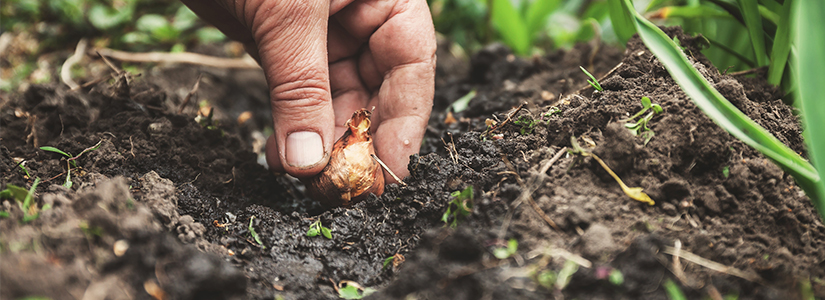
The essence of this story is what we put our energy towards, where we focus our attention, how we set intentions, and stay consistent with those things is like taking a trowel into our inner garden and planting what we wish to bring to life. It may take time, and in an impatient world, it may seem as though nothing is happening. Yet, when the conditions are right, when we’ve nourished the soil and tended to the metaphorical weeds, things blossom. And so I am reminded once again, with the arrival of this new season, to tend to my inner garden and honor the many times I have put my hands in the dirt and am reaping what I sowed several months ago.

May you be reaping the benefits of all you’ve planted in your life and may you take some time to enjoy the beauty of all that has come to life through your own energy and effort. Happy equinox!

Friday, March 19, 2021

Concentrate


As I was checking out an article from The Tricycle Community, something caught my attention. “Studies show that the average human now has an attention span of just eight seconds, down from 12 seconds in the year 2000”. What? I thought to myself…C’mon people, we can do better than that! Eight seconds and whoosh…onto something else. Can we solely blame technology, social media, and the 24/7 newsfeed or is it something else? Can we actually improve our ability to focus or should we just surrender to the never-ending tug for our attention? And maybe it’s more of a yank than a tug. According to Fast Company, in 2011, Americans took in five times as much information every day as they did in 1986—the equivalent of 174 newspapers. And those numbers are 10-years old!

This bombardment of information is doing a number on our ability to hunker down and pay attention. Our inability to focus on something discourages deeper states of contemplation and experience, disabling our creativity and our ability to be present, not to mention feeling scattered and overwhelmed which impacts our nervous system. I have recently heard on National Public Radio, reports that another pandemic is coming and it’s around our mental health. Depression is the number one health concern globally…yep, it’s everywhere and isn’t going to go away on its own. So do we need to head off to a cave in the Himalayas in order to recalibrate our brains or is there another way?

Many of the ancient wisdom traditions believe that concentration can be practiced and, in doing so, we can improve our state of mind. Buddhism has the Noble Eightfold Path, with the steps being Right Understanding, Right Thought, Right Speech, Right Action, Right Livelihood, Right Effort, Right Mindfulness, and Right Concentration. In yoga, we have the eight limbs which are Yama (external observances), Niyama (internal observances), asana (yoga postures), pranayama (breath control), pratyahara (withdrawal of the senses), Dharana (concentration), dhyana (meditation) and samadhi (absorption). And although we may not come to either of these practices with the sole intention of improving our ability to focus, we can’t help but work on it as it is woven into the fabric of these traditions.

Concentration supports our ability to become mindful and without it, our level of awareness of the present moment and what’s happening within the present moment dissipates. If we’re scattered like fall leaves on a windy day, one way to calm things down is to move inside and in yoga, this is called pratyahara or withdrawing the senses. We allow ourselves to let go of our connection to all that’s keeping us occupied in the external world so we can enhance the opportunity to focus on just one thing…which is the definition of concentration. Setting aside the time to come into our practice is the first step…getting to the mat is often the biggest obstacle. Next, we turn off our devices, close the door and give ourselves over to the time we’ve been able to commit to. When we turn our focus onto physical sensations such as the movement of the breath, the sense of sound or touch, we narrow our vision and begin to pull into our inner world.

Throughout the pandemic, the challenge of concentrating at home has become more difficult. I have seen many people on Zoom calls over the past year getting interrupted either by pets, doorbells, handy-people, or others in the household. In the “old days” of coming to the yoga studio, all of those potential distractions were minimized in that you’ve left home, have been asked to turn off your phone, remove your shoes, and disconnect for the duration of the class. Nobody needed you and you could fully show up for yourself. Yet, despite the potential distractions, coming to the mat and working on narrowing our focus we can enhance concentration, called Dharana. It is said that as we begin to deepen concentration, we glide towards Dhyana or states of meditation and through steadiness, we have moments of Samadhi which is a merging of consciousness.

These states of concentration and meditation also lead us into states of flow, where people experience peak and optimized performance. In tennis I knew I was in a flow state when the ball looked to be the size of a grapefruit, time seemed to slow down, and just the right amount of effort was needed without struggle or stress. I had clarity and ease. This can certainly translate into other areas of life through music, art, or being in nature. This spaciousness opens us to all forms of insight and creativity, enhancing our ability to profoundly experience life.

If you find that you’re distracted, come back to something that is simple and provides an anchor. It’s the magical moment when we notice we’re no longer where we wish to be and we begin again. Over and over again. And as Mark Epstein said, “We practice right concentration not to experience blissful states but to help us entertain uncertainty.”

In these unprecedented and uncertain times, offer yourself grace and a place to begin again. I know we can do better than eight seconds!

Thursday, March 11, 2021

Hard Is Hard


Recently, I was in conversation with a friend who was telling me about making a big shift in their life and commenting on how hard it is to be moving and letting go of a familiar way of being. I simply replied, “well, hard is hard”. They heard these words and felt supported as I was acknowledging their challenges and holding the space for them to be present as they were dealing with the difficult reality of change.

Just this week, we have passed the one-year mark of the World Health Organization declaring the Covid-19 virus to be a pandemic. On so many levels, all of us have gotten to know hard in a new way. When I asked a class if this past year has been hard, 100% of them raised their hand. None of us have been through anything like the past 12 months…our lives and businesses not only disrupted but for many people lost forever. We’ve had to learn how to be with a formidable force over which we had very little control. The act of living from a more day-to-day perspective has been unfamiliar to many and anything that is unfamiliar and new can prove to be challenging whether it’s a pandemic or a move to another state.

Tying into this is something else I came across only a couple of months ago-toxic positivity. When I first heard that phrase, my ears perked up as part of me thought how can positivity be toxic - isn’t that where we’re encouraged to place our focus for fear of manifesting undesirable thoughts? An intriguing podcast by BrenĂ© Brown on Spotify called Dare to Lead (click here to listen), Brown interviews the author of Emotional Agility, Dr. Susan David. Dr. David describes toxic positivity as:

“Toxic positivity is forced, false positivity. It may sound innocuous on the surface, but when you share something difficult with someone and they insist that you turn it into a positive, what they’re really saying is, My comfort is more important than your reality.”

It’s a lack of acknowledgment and facing difficult emotions, a way of bypassing the tough stuff to make others and ourselves feel better. Brown and Dr. David go through an example of this in action with Brown writing down the emotions she’d been recently experiencing. They included overwhelm, anger, and fear. Dr. David then said that a typical next step would be the suggestion to turn the paper over and on the other side, write all that you are grateful for. And this was the bypass. Her research on developing our ability to emotionally adapt and thrive shows that when we confront difficult emotions we actually build resilience. We become less emotionally rigid and grow in our emotional agility.

Given the past 12 months, honoring and noticing the tough emotions has been a way for us to cope with what feels like a restricted life. Instead of sugar-coating things, facing them is a healthier choice. It’s as though the recognition of the messy and muddy brings it out of the shadows and allows for them to be present. When we can see what challenges us we can work with it rather than taking a detour around it.

Over many years of working 1-1 with people, I have had countless comments from people, especially women, who say they have so much to be grateful for – a nice house, marriage, family, career, financial security, good health, etc., and they simply can’t understand why they’re unhappy, lack inspiration, or have feelings of depression. They feel as though they have no right to complain or to feel bad. Instead of facing it head-on, they hold the hard emotions off to the side rather than dealing with them.

One thing our yoga/meditation practice teaches us is to become radically present and notice all that is happening. Instead of wishing things to be different from what they are (I wish the pandemic would just go away) and creating more suffering for ourselves (it’s not going away), we learn to become more observant and mindful. This includes feeling all that arises, noticing the good, bad, and ugly moments, sitting with them, knowing they aren’t permanent states, and practice being in a place of equanimity as we ride the waves. As Thich Nhat Hanh famously said, “No mud, no lotus”.

When we acknowledge that hard is hard, it permits us to feel the fullness of all of our emotions, not just the ones that we think are desirable. So the next time you’re feeling that internal tug of difficulty, bring it to the surface and say this feels hard and acknowledge that’s exactly what it is…hard is hard. Do the work and your ability to navigate through difficulty will expand.

Friday, March 5, 2021

Purpose


I was interested in checking out an online movie recently entitled “Meditation”. I clicked on the link and as the serene music began to play, a voice spoke the following words: “Our purpose in life is to help each other through it.” I hit the pause button and didn’t watch anymore of the movie, not because I was uninterested but because I felt the potency of those words.

Having spent the past several weeks going through the death and subsequent grief of my Mother’s death, those words rang loudly. I have felt the love and support of so many people helping me get through life. It expanded my thinking that purpose isn’t just an individual pursuit but one of humanity and how we tap into our own life’s purpose affects others. I often support yoga students in their studies by saying “practice begins within”, meaning that when we begin to understand our individual needs and work to meet them, it begins to move outward to others. When we create the inner container for our own growth and evolution, we create an additional or perhaps larger container to support the growth and evolution of others. Instead of looking outside of ourselves for answers, we turn inward and recognize that all we need to know is sitting within us.

I decided to do a bit more research and came across work on the purpose of life from the University of Minnesota and Richard Leider, who is a coach and purpose expert. To quote Mr. Leider, “genuine purpose points to the end of a self-absorbed, self-serving relationship to life.” Basically, when we become clear on our authentic purpose, we are able to share it with the whole world. This sentiment so deeply aligns with how we can approach our yoga practice, from the inside out, enabling ourselves to help each other through the many challenges that life throws onto our path.

Leider also came up with an equation: gifts + passion + values = purpose. Rather than trying to find an occupation that ties us to a restrictive label according to what we do, purpose can be more expansive no matter what stage of life we’re in. When we understand our special qualities and gifts, what we do well and a unique personal characteristic, coupled with the spark that ignites enthusiastic passion and align it with our personal values, our purpose begins to reveal itself. In an article in Fitness Matters entitled “Discover Your Purpose” by Lee Jordan, MS and Beth Jordan, the authors state that “If you can be fired or retired from it, or if it can be taken away from you, it’s not your purpose”. So often we confuse our profession or occupation with our purpose and so often they couldn’t be further apart.

Getting clear on our talents, passions, and what we value can apply to anything that we’re undertaking regardless of whether or not it brings us financial reward. From the age of 19, I have been teaching in one form or another. Yet, it wasn’t until 15-20 years ago that I realized that sharing knowledge was one of the reasons for this embodiment. I was always drawn to sharing knowledge and supporting others whether they were my first young gymnasts that I coached, teaching at my university to physical education/recreation students upon my graduation, group fitness classes, personal training, or the current incarnation of what I’m doing in the form of sharing the teachings of yoga. The content has changed but the purpose hasn’t. And whenever the form of what I’m currently doing also changes, I’m guessing that a large part of me will continue to see how I can share and support knowledge and the empowerment of individuals.

I had the unique gift in life of training four nonagenarians during the same period and they all had something in common. They were all still connected to their purpose in life in their 90’s. One was a writer, one a professor emeritus, one a consultant for his son’s retail business (which he started), and a retired teacher who was working at the local braille institute teaching vision-impaired people how to knit. They were all engaged and mentally agile, still participating in a way that seemed to be an ongoing connection to and reflection of their whole life. They had a purpose to support and walk others through their lives. I don’t even need to look back at what they taught me as their actions at the time were powerful examples of how we can move through life with purpose and meaning. It supported each of them in thriving to their final days and that is a gift I was happy to receive.

Most of us want to thrive as we age, staying active and healthy. One way to do that is to live with purpose as a guiding light. I thank the many wise elders that have shown me an example of what that looks like. After all, we are here to help each other make it through this often wild and unpredictable thing called life!

Thursday, February 25, 2021

Your Life Is Your Message


During one of my visits to New Delhi, India, I walked past a large poster of Mahatma Gandhi that said, “My life is my message”. I stopped and thought, “Yes...that couldn’t be more perfect”. Some part of me wanted to remember those words so I had my picture taken with it. About a week ago, as I was working on the slideshow for my Mom’s Celebration of Life ceremony, I came across a similar quote by the Buddhist teacher, Thich Nhat Hanh saying, “Our own life has to be the message”. It seemed truly like I once again needed to marinate in this thought and, hence, it became this week’s theme.

It’s so crazy to be able to condense a person’s 88-year long life in a slideshow. It has taken many hours of editing, viewing, and deciding which images represented the life of my Mother. I also asked my three siblings for one word that summed up what her life meant to them. For me, it was kindness. She modeled for me what kindness in action looked like: always remembering birthdays; ensuring that her four kids had an equal number of presents at the holidays; not gossiping; she was a good listener; she collected things for her family that she thought we would treasure; volunteering at a thrift store; she sent boxes of clothing to grandchildren; offered financial support during hard times; didn’t shoot down anyone’s dream of doing something; and she laughed with an open heart. She was a woman of few words yet was able to fully express kindness in action.

We don’t often think about the meaning of our lives as we’re busy simply living them day to day. The beauty of stepping onto our yoga mat is that it’s the perfect forum for us to take time to regularly check in with our purpose and values. It offers us moments of quiet and stillness to reflect and ask ourselves if the current choices we’re making are in alignment with how we wish to be in the world. It has the potential to become a daily act of living consciously, with our highest intentions leading the way. Death is a doorway into contemplation, one we so often try not to open. Yet wouldn’t it be a shame to get to the end of our life and look back with regret for not taking action toward our deepest calling and yearnings?

The author and host of The Slow Home podcast, Brooke McAlary, tells a story about looking at a book of writing prompts and opening to the page where the prompt was to write your own eulogy. She did with great dedication and it altered her life choices. She had two young children and wasn’t sure if how she was currently living was the eulogy she wanted to write about. She became clearer on her “why” of life and made changes. Perhaps if all of us took time to write our own eulogy, we would create a point of focus to keep us on course.

Living with intention takes work and consistency. I liken it to the 23-hour couch potato, where someone who goes to the gym every day for an hour and returns home to a sedentary lifestyle the other 23 hours, often in frustration by the lack of progress in fitness. It’s what we do most of the time that makes a difference, including living from a heart-centered and intentional life. Over the course of your day, what do you spend your time thinking about? What actions do you take throughout the day that are in alignment with your highest values? How are you treating yourself and others? Simply said, it all adds up either to bring greater consciousness to your life or to keep you stuck in un-evolving patterns.

If you want your life to be your message, Gail Brenner (Life is Expressed in our Actions), suggests we can do the following:

·       Become aware of fear so it doesn’t divert us

·       Identify roles and patterns that aren’t serving

·       Listen to our deepest yearnings

·       Make decisions with full awareness

·       Follow what brings us happiness, joy, love, and true fulfillment

I was going to say there are no words for my Mother’s long life, but there are. It was the message of her life - kindness.