Thursday, November 12, 2020

Relax and Trust


Yet again, another week of uncertainty and chaos. It’s beginning to sound and feel repetitive. From riding the waves of the US election to an explosion of Coronavirus cases with no end in sight, the ground beneath my feet is feeling unsteady. As I checked in with students prior to classes over the past several days, one thing was prevalent…tension. People were voicing “I need a good stretch. I need to just show up today. I need to unwind and relax. I feel tight. I’m holding tension in my neck…” and on it went. If the body is noticeably tense, it’s a sign of being threatened and being in the vigilant aspect of our nervous system. And then, a friend reminded me of the quote, “Our ability to relax is in direct proportion to our ability to trust life.” Wham. There it is.

As I contemplated the above quote, I asked myself, how have I come to not be trusting life?

I began to take stock of what got my knickers in a knot and noticed that I had moments of being sucked into the black hole of media. I turned it off on Election Day, giving myself a buffer from the anxiety, yet when I turned it back on in the subsequent days, I got quickly sucked back in. I noticed myself not trusting the greater power of humanity and being lured into the drama narrative. The lack of trust in what was happening outside of me was pointing me in the direction of fear-based reactions and thoughts.

In order to recalibrate and align with what I value in my life, that of compassion and equanimity, I needed to remember what I do trust in life and how to switch back toward what was supportive rather than destructive of my own inner health and peacefulness. The list below is what emerged:


  •         It’s time to listen. I need to stop talking, stop trying to fix it, and simply listen to what is being said.
  •         It’s time to be on my mat. Every day with full presence and openness.
  •         It’s time to remember my deeper purpose. Why am I in this embodiment, anyway?
  •        It’s time to come back to my heart and get out of my head.
  •        It’s time to trust what I have trusted before-my intuition, my practice, stillness, and the discipline of my daily practice.
  •         It’s time to unplug to encourage relaxation.

When I come back to what I have control over and return to the inner spaciousness and wisdom of my own being, my need to avoid what I don’t like begins to dissipate and I can work on finding ease with whatever situation I’m facing.

When we turn our energy away from our inner being, it’s easy to get overloaded with anxiety about things which we truly have little control over. It shoves us into the part of our nervous system which is on high-alert and has real physical consequences, particularly if we never break out of it. Relaxing is imperative for our health on all levels and isn’t accomplished through avoidance, online shopping, self-medicating, prolonged anger, or anxiousness. BY coming to our mat, we give our weary heart an opportunity to unplug from the outer and plug into the inner, where we truly have a locus of control and agency. If we can offer ourselves 15-20 minutes of a supported relaxing pose (such as corpse/Savasana), spend time sitting in meditation or doing conscious breathing, we can interrupt the disruptive pattern that knocks us off our feet.

We are eight-months into the pandemic and I’m still in my studio, by myself, teaching to the small screen of my iPad. I’m grateful that I can do my work in the world and see the incredible reactions of our yoga community and how thankful they are that we can gather and practice, albeit, virtually. And at the same time, I see no quick or easy solution. In order for me to stay connected to what’s important, I need to stay with what supports equanimity and offer myself compassion during challenging times.

Magic lives within this practice we call yoga. Get on your mat and let’s remember the magic together.

Thursday, November 5, 2020

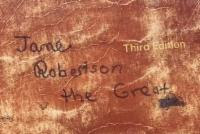
Jane the Great


If you're wondering if this statement refers to me, well, yes it does. I officially changed the spelling of my name many years ago to Jayne and the above is how I was identified in my early years. As my siblings and I were preparing our Mother's house for sale, we had the imposed rite of passage of clearing out 54 years of “stuff” from an organized packrat. Mom literally never threw anything out and as my brother, Ken, emptied out the jam-packed attic and opened a dust covered box, he started to laugh and showed me the above folder. Apparently, way back then I had a high level of optimism as to how my life was meant to unfold. Perhaps my elementary school self knew on some level, that greatness could be an aspiration and that, perhaps, inking the moniker onto my folder would affirm it.

The theme this week isn’t completely about individualism as that would appear quite divergent from the yogic philosophy of interconnectedness. But it is about knowing what our individual and unique gifts are to the world. It also beckons the question of how your life has impacted others, the “why are you here?” inquiry which lays at the heart of many spiritual practices. We so easily get stuck at the point of identifying who we are by our descriptors --- woman, friend, spouse, yoga teacher etc. but what if we are none of those things but simply an energy that people couldn’t quite put their finger on? I have met only a few such people whose presence is what I felt above all else and in that presence, the message that was conveyed and was too strong to ignore was based on love.

Imagine going through life in a way that when people asked, “Who are you? What’s your name?” and you replied, “I am love…” I bet the reaction would be one of surprise with words like “You are crazy” getting whispered under the breath. We express our identity through labels so we can more easily make sense of our relationship and commonalities with others. We don’t know what to do with “I am love”…how do you interact with that? “Ok, love…see you at the game?” Instead, we work through the visage of what identifies us and ultimately, trust that if we step into our greatness it will resonate away from us.

My grade school self knew that greatness could exist within me, but what she didn’t know at the time was how that would be expressed over a lifetime. I have had many moments of greatness and awe and inspiration, yet articulating many of those becomes more elusive. In conversation with my husband, I asked what made him great and he hesitated. Then I re-framed the question to how has his life made a difference to other people’s lives? He also thought that any of the qualities we were talking about weren’t unique to him-loyalty, honesty, direct communication, a drive for social justice and equality are some of many. Yet, I said to him, not one person walking this earth expresses it in the way he does as there is only one of him and his way is beautifully unique.

My quote of the week from Robin Wall Kimmerer, the author of “Braiding Sweetgrass: Indigenous Wisdom, Scientific Knowledge and the Teachings of Plants” reflects the way of the Three Sisters which are corn, beans, and squash. Each individual seed is unique unto itself, yet when the three are planted together in a mound of dirt, they “provide a visible manifestation of what a community can become when its members understand and share their gifts.” The corn emerges first from the soil and grows tall, followed by the beans which find anchorage along the cornstalks, and the squash create an underground network so that broad leaves can shade the soil to optimize moisture. The three work together although they have different and individual qualities.

Given where we are at this point in time, with division and finger pointing abounding, I am inspired by the Three Sisters and reminded that although it might feel we stand alone, when we merge and express our greatness, everyone benefits. It is up to us individually to create the “Namaste Effect” as coined by Nischala Joy Devi. When we are truly connected to our inner radiance and we recognize another person connected to theirs, no division exists…we are connected and we are one. The light in me, sees and honors the light in you, and when we are both present in that moment, we are one. Namaste.

Thursday, October 29, 2020

Finding Grace


Last week, something happened that hadn’t happened in seven months…we paid an in-person visit to my Mother. She has dementia and is living in a small board and care facility, fifteen minutes from where we live. She receives excellent care and has been kept safe during this time of the pandemic where she is one of the most vulnerable, and for that, we are extremely grateful. We’ve had weekly phone calls and a few family Zoom calls to stay connected, and this past weekend, we were allowed to see her in-person.

We visited outside, with my husband and me wearing masks and sitting away from her, and spent about 40 minutes together. As we were saying our farewells, she indicated that we were forgetting something…giving her a hug good-bye. My heart broke a bit as we looked at her and I told her we aren’t allowed to give her a hug at the moment. She offered a resigned shrug and said, “okay”. As we drove away, and for the next couple of hours, I had an underlying sense of agitation. It was a difficult visit in some ways, trying to navigate a conversation behind a mask with an 88-year-old person who relies more on body language than spoken words. The inability to rub her back and sit close by to share a recent slideshow felt disconnecting and what I found myself needing afterward was to offer myself grace.

This was just one sign in a time of many challenges.

As I reflected upon my own need for grace, it expanded to not only my Mother but to so many beings who’ve been greatly impacted around the world. One of the unspoken things we can turn to in challenging times is to soften. Soften our reactions, our expectations, what we say, and how we act towards ourselves and others. I was reminded to hold myself gently, once again, without hardening my heart.

As I’ve shared the theme this week, I realized I’m not the only one needing to find grace. People are fragile at the moment and it’s no wonder. Aside from an on-going pandemic and interruption and re-organization of what we knew to be our “normal” lives, we are in the midst of powerful energetic shifts. In a couple of days we’ll have a “blue moon”, the second full moon in the month of October. And, it happens to be falling on Halloween which is also connected to the Celtic celebration of Samhain (pronounced SAH-win). It signifies the end of the harvest and the mid-way point between the equinox and solstice. In the Northern Hemisphere, our days are getting shorter and we are heading into the darkness of winter. It signals a time to celebrate the abundance we have reaped and to honor our ancestors. It is said that “the veil is thin” during this time, between the worlds of the living and those who’ve passed before us. In Mexico, a related holiday is underway called Dias de Los Muertos, or “day of the dead”. Add to this a gigantic political election occurring next week in the USA, it’s no wonder that people are feeling un-grounded and wobbly. It’s the perfect time to invite self-compassion and get grounded in order to emerge on the other side of all of this with less suffering and more empathy and kindness.

I have a few suggestions in navigating your way into receiving more grace. The first is to have a news fast. Unplug for a day or more from the breaking headlines and social media. Other ideas are to get outside into nature and feel the elements-bare feet on the earth; wind in the hair; sun on the face; stop and smell the roses; moon and stargaze; and put your hands in the dirt. Offer kindness to others, they may need a dose of unexpected grace more than you could possibly know. And finally, let go of having to be any particular way right now. I’m trying to soften my connection to perfection. I hear myself saying, “It’s okay for it to not be perfect. Let it go.” And in that, I find what I need…a moment that feels like an unraveling that shifts into one of connection-that of myself to my own heart.

Thursday, October 22, 2020

Can You Be Too Flexible?


I've been asking this question to classes throughout the week, "Can you be too flexible?" It’s been interesting to see some people nodding “yes” and some “no”, when actually it’s posed as a rhetorical question, a provocative way of engaging deeper thought.

Over the years, I’ve heard people say that they’re “too inflexible” to do yoga, or they want to become more flexible, so perhaps yoga is something to try. Some people comment on the hypermobility in others saying they must do yoga, or if someone exhibits big ranges of motion that they must be “good” at yoga. This makes me think that flexibility is something to be attained and is a coveted prize. Ever since I was a young kid, I’ve been flexible. I could do the splits without trying and backbend easily. Friends and family members would comment on this special prowess that I possessed as though it were a rare and prized quality. With this inherent range of motion, I gravitated toward dance and gymnastics, other realms that praised the flexible beings walking the earth.

If I think about the more extreme examples of flexibility, rhythmic gymnastics, dance, artistic gymnastics, and yoga all come to mind. They train beyond normal and functional ranges of motion to achieve a particular aesthetic, one unreachable by many.

I gained from the gift of being flexible until I didn’t…leading to an unstable lumbar spine, with increasing pain as I have aged. Health practitioners I’ve been working with have said to me, “You’re too flexible…we need to stiffen you up!” It was a blow to the ego as I have been praised for my “ease” in larger ranges of motion for most of my life. It’s also been a humbling re-calibration of what serves me and what will continue to do so. My focus has changed to creating greater stability and less mobility.  Moreover, it’s been teaching me to honor and respect my physical body as it changes over time. It’s a tough lesson.

We all have something called a tipping point. In relationship to our physical selves, it’s our tissues managing a certain load or stress, undergoing something called viscal elasticity, which is when a load is applied to tissues, it slowly elongates and deforms to the applied stress. All of our tissues have a limit to this stress before injury happens. For bones, it’s about 2% with more than that resulting in the bone breaking. The stress can come in the form of a heavy load, time, or fatigue. So, as an example, if we hold a plank pose for a relatively long period of time we begin to quiver and shake as our body tries to recruit more muscle fibers until eventually, we not only lose form and the integrity of the shape of the pose, but we begin to lose the benefit of doing the pose. More does not equal better.

This week’s thought has been about not only managing our physical load, optimizing the balance between stability and mobility, but looking at the other stressors in our life that may be related to our mental health and our emotional state. These past seven months of the global pandemic have been tough…an extra load added to what is often a challenging life to begin with. People’s mental health has been affected, our emotional steadiness challenged, and a calling to our deeper spirit for support. Know that all of us have a point at which we break, physically or otherwise. With awareness, we can become wiser to what we cannot only tolerate but to what supports us in thriving rather than just getting by. I’ve been pointing to this theme over the past several weeks with the encouragement to do less, take rest (the refractory period), create boundaries, get outside, and honor the many forms that our yoga practice can take.

We all know the metaphor of the camel and the straw. Perhaps we can say “no” to adding more into our lives and accept the nature of our inherently divine selves, perfect just as we are.

Thursday, October 15, 2020

Boundaries


It struck me on an early morning walk that I needed to reverse course and say “no”. It’s often as we are undertaking mundane tasks such as walking, folding laundry, doing the dishes, or taking a shower that we’re hit with moments of truth and clarity. I had made a commitment to become an accountability buddy for my Shamanism course and after receiving the information of what I needed to do next, felt a wave of overwhelm. I was in the midst of creating a surprise party for my husband’s 70th birthday as well as content for a soon-to-be-launched new course. Individually, these don’t sound like obstacles but given the pandemic, uncertainty with business, and an upcoming Presidential election, it just felt like one more thing had been added into my realm of contemplation. And in the peaceful morning walk, my inner self firmly told me to say “no” to another commitment. And I listened. When I got home, I sent an email apologizing for having to withdraw as an accountability buddy, but since boundaries are what we’re currently studying, I’m going to honor mine and back away.

I immediately felt relief and although I had a pang of “Wow, perhaps I’ll be missing out on something cool”, I have made peace with the decision. Boundaries are acts of self-care and self-love. When we have them working well for us, our self-esteem remains intact and we can truly practice the self-realization portion of our lives as it is a reflection of asking ourselves what we need and to choose what serves us.

I was once told during a reading of my chakra energy that my second chakra was wide open, as though I had a drawer pulled out that I rarely closed and people found it to be the perfect dumping ground for their stuff. Until that moment, I didn’t realize that I was leaving myself open and as a result felt overly emotional and sensitive. I was also told during the same reading that my throat chakra was closed, as though I had a bird locked in a cage, waiting to be freed and express itself. I had unconsciously put a walled boundary around my self-expression and it was bursting to be free. What helped closing one chakra and opening the other was twofold. First, becoming aware that my second chakra was open and my throat closed, was having a physical and emotional impact on my wellness, and second, that I could choose to close the drawer and unlock the cage, in other words, I had the power to adjust my boundaries.

When things impact us, shifting us away from our optimal state, we have the power to make changes. Standing in the strength of our third chakra is related to standing up for ourselves. It has the element of fire and the potential to transmute energy. When we notice a boundary is being breached, we have the power to adjust it. It often means saying “no” to something and possessing the self-worth despite the fact it may impact or disappoint someone else. When we put up a boundary, we do so from a place of self-love. If we say “yes” to something without having the full-hearted commitment to it, not only do we create suffering for ourselves but it pulls us out of living from a heart-centered place, and that energy echoes away from us. As Brene Brown says, “Daring to set boundaries is about having the courage to love ourselves, even when we risk disappointing others.”

 This week’s thought is to look within to see what you need and to recognize we have all sorts of boundaries-physical, emotional, mental, and energetic. We are asking ourselves if any of our boundaries are too malleable or too rigid, and can we do something to change it so it serves us more deeply? Every morning as I finish my meditation practice I clear my energy fields and surround myself in protective luminous layers of energy. They’re translucent so I can send out intentions from my highest self and receive goodness from the outer world. They’re protective through the intentions I set to not absorb what doesn’t serve me and to release that energy back to Mother Earth.

The below quote came to my inbox this week and feels like the perfect conclusion to this week’s blog…enjoy the golden circle of light!

The great mythologist, Joseph Campbell, who spent his entire life studying the religions of the world, was asked, “What is the definition of sacred?” and “How do human beings make something sacred?” He responded, “It’s the simplest thing in the entire world, and you do not need a priest for it, anybody can do it. Here’s how humans make something sacred: You draw a circle around it and you say everything inside this circle is holy. It’s sacred because you said so. That is called a boundary, and a boundary is not a wall. A boundary is not something that you hide behind. A boundary is a golden circle that you draw around the things that matter to you, and you say everything inside this circle is sacred. If you treat it with respect, you are allowed to come in, but take your shoes off and bow because you are coming into the center of holiness here. And if it’s not, and it’s outside, then what do we say? We say, “I do not care.”

Friday, October 9, 2020

Many Forms of Practice


If you practice yoga poses, does that mean you have a yoga practice? If you’re not able to do a yoga pose, does that mean you’re not a yogi? Our culture has commoditized yoga as a form of exercise. Click on any drop-down menu of exercise options and yoga will pop up along with kickboxing, Pilates, and personal training. When we see images of people doing a wildly expressed yoga pose, often perched on the edge of a cliff at sunset, we think “Wow…they must be good at yoga!” I’ve had people tell me that their friend/niece/cousin is “good” at doing yoga to which I lift my eyebrows and wonder, “What do they actually mean?”


We are impressed with people’s ability to perform postures and make the assumption that if they’re physically accomplished, they too must be good yogis. However, yoga isn’t really ever about the poses but rather about enlightenment and expanding consciousness. The second yoga sutra of Patanjali can be translated as “Yoga requires the calming of the fluctuations of the mind” (1.2 - Yogas citta vrtti nirodha) rather than thoust must touch thine palms to the floor in order to be in a state of union and equanimity. In other words, if you can breathe, you can do yoga. If you can calm your mind and reduce your suffering, you are well on the yogic path.


Over the past couple of months, my yoga practice has started to look different from what it previously looked like. I’ve switched from doing some yoga poses such as revolved pyramids, deep forward folds, and full wheel backbends. It’s not because I can’t do them, but when I do I trigger a deep sciatic nerve pain. For years, on and off, I’ve felt the pain, but it has gotten more pronounced and hasn’t been subsiding. Deep inside, I knew that something had to shift and I needed a voice other than my own to guide me into changing up my practice. Hence, I began to “do less” in what triggers my pain and to do more to create greater spinal stability. It means adding in a daily regime of stabilizing exercises, eliminating stronger/deeper poses, and tweaking how much I physically teach. The shift has been challenging as I was uncertain if I could tolerate resuming a full workload with such modifications. But I have and so far, so good. I’ve given myself permission to create something different and that feels inherently good. One thing that hasn’t shifted is the commitment to my personal morning practice. It includes movement, a breath-centered practice of stillness, meditation, and contemplation. In fact, when I was sharing with a friend the shift in my back pain, they asked if I was still able to “do yoga?” and instead of me answering, my husband said, “You’re on your mat just as much if not more!”


My thought of the week is to honor all forms of practice and how we shift and modify what we’re doing based on our physical, mental, and emotional state. As illustrated above, injury has shifted my practice and other catalysts for change come in the form of illness, emotional stress, and overwhelm. Sometimes life is just hard and we allow this to become the obstacle to getting on our mat, yet this is exactly the time when we need it the most.

Recently a student who sustained an injury was feeling as though they couldn’t do their practice. With a broken wing, they were out of action. In my reflection to them, only their arm was affected not the entire body, so this was the perfect opportunity to release the attachment to what we think our practice should look like to adjusting it to what we need and what will benefit us most deeply in the present moment. When we cling to our practice, holding expectations of that being “it”, we create suffering when it can’t be as it was before.


This is particularly powerful as we age. My practice that began around 1993 looked very different to what it looks like in the year 2020. It has morphed, evolved, and taken shape to what I need in the moment and it may never look the same as it did even six months ago. If I cling to that image of what “I used to be able to do” than I will create my own suffering. If I can re-frame it into what serves me in the highest essence of who I am today, I can dial down the fluctuations of the mind and find greater ease in what is.


And all of you can do this as well. What we need is the discipline to some form of a regular (daily) practice and someone to support us along the way. Like all who have come before me, I have teachers who have filtered their teachers’ influence and passed it along to me and I do the same. For those of us as practitioners, we utilize what resonates within us to create our own container for a personal practice. We offer ourselves solace in that this will change and evolve over our years on the mat, fine-tuning what it is that serves us on our deepest level.


Let go of thinking poses are the be-all and end-all. Open to the many possibilities and forms your practice can take. It’s a beautiful and empowering experience. 

Saturday, October 3, 2020

The Refractory Period of Muscle Contraction


I've gone back in time to the year 1982, the first semester of my foray into my degree in Physical Education. I was the first, and only, international student (having recently arrived from California) stepping into the hallowed halls of Phys Ed and Recreation at Victoria University in Melbourne, Australia. As I sat in Dr. David Lawson's office, the head of the department, he firmly suggested I focus on one of the most difficult courses that all first-year students needed to undertake...Human Biology One. He said, "If you can make it through this subject, you'll set your course in a positive direction." I had incentive and, thankfully, I'm a self-proclaimed anatomy geek, so the challenge was readily accepted.

When I first met the lecturer of Human Bio-One, Dr. Mick Carey, I could see why the course could be intimidating. Dr. Carey was a no-nonsense kind of bloke, wearing a lab coat and giving the stink eye to any unruly or undisciplined "phys'eder". He held high standards and many had difficulty meeting it. In one of the practical labs, we had the freshly harvested quadriceps of a frog. We placed the muscle in a solution bath with its tendons tied to a measuring device and when we added another solution to the liquid bath, the muscle would contract and then relax. We were measuring things like strength and time of contraction, looking to firing off another action potential for a follow-up contraction. If too much contractile solution was added, or too soon, the strength of the contraction weakened. We were looking at the refractory period, the time needed for the muscle fibers to be ready once again for a contraction.

Obviously, that lesson stuck as I'm once again referring to it 38 years later. But it struck me, how our physiology and structure are not only meant for movement but it needs rest. And in our culture, rest isn't typically something of high value. Hard work, maximal exercise, and pushing to the limit are honored qualities. As an example, here in the States, the average paid vacation time per year is a measly two weeks whereas in Europe and Australia, it's four weeks. 


So how does the refractory period play into our yoga world? My answer is quite simple - how doesn't it? If we seek optimal health of body, mind, and spirit, we do so by undertaking our practices, doing the work, and then letting go into deeper spaces of stillness and quiet. Activity/work is equally as important as rest, and in yoga, the ultimate refractory phase is at the end of the practice...that of savasana or the corpse pose. I'm grateful to students at my studio who have come to truly value savasana, often requesting a longer one before we even begin! I have heard stories and had the experience of a short, token-like savasana, and how some students will actually pack up their things before savasana begins and head out the door. Many people believe that just "laying there" is a waste of time and hold it to be of little or no value.

In our brain, the number of activation centers far outweigh the relaxation centers. Getting our nervous system to shift from a sympathetic, outward-facing and active space to the parasympathetic, restoring side of our nervous system is, therefore, more challenging and needs time. It is thought that it takes about 15 minutes to create this shift into our restorative space and in that space is where we truly recover, heal, and rebuild. 

The thought of this week isn't to get too heavily into the physiology and biochemistry of the refractory period but to simply point out that our being functions optimally when we have both activity and rest. Ideally, the activity side of the equation is undertaken with optimal form for our individual structure, with mindfulness and with attention. When we precisely dial in our activity, not overdoing it, and follow it up with adequate and deep rest, we not only balance our physical selves but the nervous system which affects our overall health.

I encourage you to pay attention to the type and quality of your rest and recovery from activity, from hydration and nutrition, to more passive forms of movement and to your sleep hygiene.

I think that Dr. Mick Carey would be not only proud but astounded that I'm talking about this in the year 2020. So this is to him who taught me about honoring the refractory phase of our physiology.

Thanks and cheers, Mick!