Saturday, February 16, 2019

Wu Wei


Nature does not hurry, yet everything is accomplished. ~ Lao Tzu

This past weekend I had one of those most delightful experiences of running a Restorative Intensive workshop. Sometimes the energy of the group is a synergistic combination that results in a truly open learning environment and this group manifested such energy. They asked in-depth questions, began applying the principles by the end of the weekend, and showed a sense of creativity and compassion needed to offer this type of practice to others. It was a real gem. They were in the flow of the practice and the result was magical.

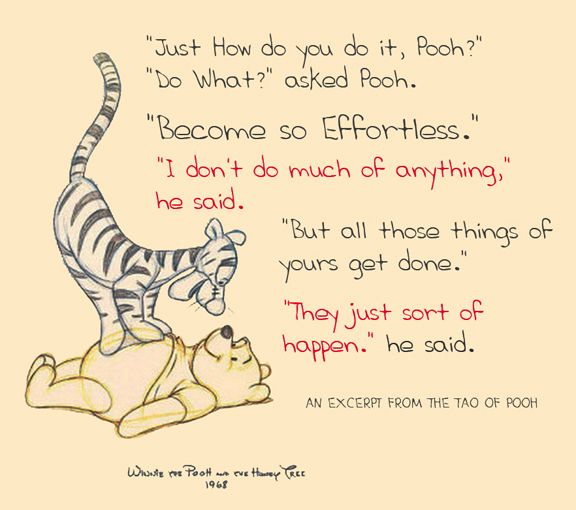
It made me think of the Taoist principle of Wu Wei, which is aligning our movement with the greater flow of life. It can be referred to as "natural action" and doesn't involve any sense of struggle or striving, but surrendering to the flow of life no matter what is happening. I was first introduced to this concept several years ago when I read the book "The Tao of Pooh" by Benjamin Hoffman. It explains Chinese Taoist philosophy using the characters of Winnie The Pooh and mentions Wu Wei in the process. Of course, for any Pooh fans, Pooh is the Zen master of all the characters, easily and without excessive effort, moving through life.

This relates to yoga as we allow our practice to unfold, inviting our body to move rather than striving or struggling in any part of the practice. Sometimes a forced practice can be seen as we try to "bind" a pose, gripping onto the opposite hand, or bouncing in order to get our hands to touch the floor. In doing so, we miss the point of the practice...one which is loving and compassionate, not forceful or competitive. In Loving Kindness meditation, this is known as equanimity, that state where no matter what's happening, we are able to view it from a place of stability rather than turmoil. In trying to keep things simple, we allow our practice to come to us, rather than setting a plan for where we want it to go, especially if the timing doesn't align with where we actually are.

Many athletes, musicians, and writers know the state called "flow" where everything simply comes together with ease. When musicians play and sync up, it's called "being in the pocket", for athletes, they find "peak performance", and writers lose all sense of time and tap into the channel of inspiration that seems beyond intellect. Yet, if you ask these people how to make it happen each and every time, the answer may be elusive. It's as though the stars have aligned and everything was just "going my way."

Many years ago, I traveled extensively and it included six months, often hitchhiking, through Africa. I flew from London to Harare, Zimbabwe on a one-way ticket, with a backpack, and no itinerary. I had heard from other travelers that to truly experience Africa, heading there without an agenda was ideal. I began to understand what "Africa-Time" really meant...buses left when they were full, you may or may not get a lift that day, and nobody seemed to be in a particular hurry or pay attention to timetables. Let's just say it was the antithesis to being in a place where punctuality and precision matter, such as Germany, Switzerland, or Japan. 

As I found my way in Africa, I was joined by a friend that I had traveled with in Greece. Annie and I had a blast exploring Crete and a couple of other Greek islands, yet when she arrived in Africa, she had only three weeks to explore. Needless to say, our energies no longer complemented each other as she had a hurried agenda and I was finding my Wu Wei. I have always felt that the rare opportunity of traveling without an itinerary or need to be any place at any particular time was the freest I have felt in my entire life. 

Currently, my life is completely timetabled as it is with so many of us. We have a schedule that needs to be adhered to in order to be productive and professional. So how do we find the natural flow day-to-day? We don't need to be elite athletes or professional musicians to find it, but we can uncover moments in our day when we simply open ourselves to being completely present and deeply mindful of our even most mundane experiences. Four suggestions to help us find our Wu Wei are:


  1. Spending time in nature
  2. Giving without condition
  3. Letting go of how we think something is supposed to look
  4. Staying open to spontaneous emergence


So my thought of the week is to trust the spaciousness of your life and to unschedule yourself from a few things. Connect to the above suggestions to get started on a deeper path of flow and enjoying doing Wu Wei, your way!


Saturday, February 9, 2019

Reminders-Do Your Work


Just as the gentle winter rains have tapped me on the shoulder recently, so have some gentle reminders falling from the Universe. These subtle signs and messages are always present, so the question isn't whether or not they are showing up in our lives, but rather are we paying attention to them when they do. I was fortunate to notice one of my subtle messages this past week and heard it as I was walking and listening to a podcast with Eckhart Tolle. Someone had posed a concern to Tolle about an addicted sister and their desire to help her with their addiction, yet the person seemed somewhat unresponsive to the many supportive attempts the sibling was offering.

To this, Eckhart replied that ultimately, despite good intentions, only she is responsible for her own consciousness and that the well-intentioned sibling was only responsible for her own consciousness. "Ahhhh", I thought, "that's just the reminder that I needed". I know I'm not alone when I say this, but I have this way of trying to "fix" things for other people. It can be seen in the work that I do in supporting people in expanding their own consciousness and connecting to their holistic selves. It's a reflection of being a "pitta" dosha, having the constitution of "knowingness" and getting things right. And this particular reminder came at a time when I was chewing on some behaviors my Mother, who has dementia, has been experiencing. My reaction was trying to "make it better" for her, to find a "fix" for the problem.

However, the reality is that I can't make it better for her as I have no control over her dementia and the roller-coaster of confusion and emotions that go along with it. Whether I like it or not, ultimately it's her journey and the path that she's been walking along for some 86 years. As her daughter, I can do things to support her along this journey such as ensuring she's safe, feels loved, and receives comfort and non-judgment when she's confused and can't remember why she's living where she's living. But I can't change her experience of what's happening to her and my reminder was to acknowledge that what I do have control over is my reaction to bearing witness to someone I love. And the way to "hold the space" for such discomfort is to do my own work which focuses on my own consciousness and compassion.

In holding the illusion that we have control over things when we actually don't, eventually leads to our own suffering. It's cloaked in the costume of wanting to help others yet reveals that our own suffering deepens when it's not ours to control. The support begins by supporting our own selves so that when we are face-to-face with suffering, particularly with those close to us, we see them with an open-hearted acceptance of where they are in that very moment. I can't change it...only my reaction to it. Yep, it was a powerful reminder indeed.

My thought of the week is to notice what it is that's reminding you to come back to your own practice. Maybe it is letting go of the things you can't control or perhaps slowing down or saying "no" to something. It might be your desire to declutter your closet or connect to a friend you haven't seen lately. Whatever it may be, the important thing is to notice when it's grabbing your attention and to return to it...that IS your practice...remembering what supports you to be the best version of yourself and to stick with whatever it takes to make that happen.

The saying above "Not my circus, not my monkey" is relevant as we turn to our own process. It's a gentle reminder to stay open to how our practice guides us and to take care of our own personal monkey.

Saturday, February 2, 2019

Solitude

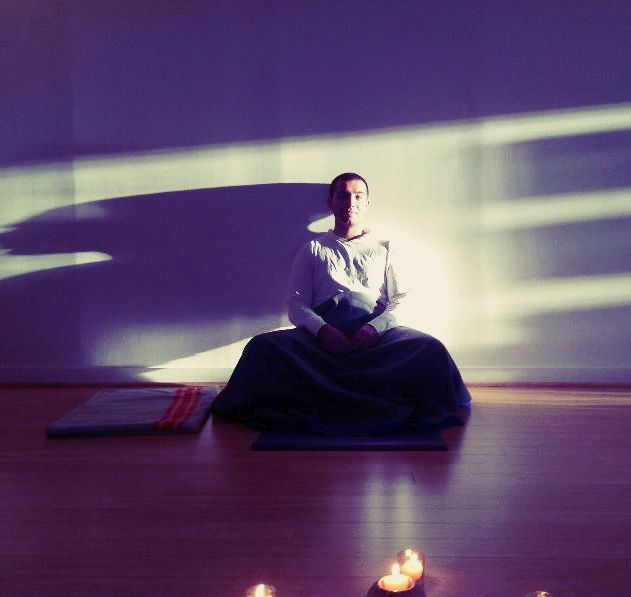
Meditation

With the hectic pace of the past month, it seemed appropriate to gravitate toward the yin side of life and talk about solitude. As I mentioned in my last post, over this past couple of weeks I have been inundated with people. We had roughly 650 tennis players in this year's tennis event, many of whom I see at the tournament desk and many who I have come to know over the past 14-years. I'd go to set up the tennis desk in the morning,  then head to the studio where we're in peak season, meaning many people in and out of classes. In addition, on my birthday, I received a barrage of birthday wishes mainly on Facebook. Needless to say, it felt like a tsunami of incoming energy, loaded with gratitude, good wishes, and much love. It reminded me of how important outward connection to community can be, the forming of relationships that reflect our best qualities back to ourselves.

And it helped to remind me that the balance to that is time alone. It has been said that one of the most powerful things we can learn is to sit alone in a room and to be comfortable with that...no distractions, with nothing to do, teetering on the edge of boredom. Yet, it isn't something that we're taught. Our culture recognizes the extrovert, those who face outward, engage and get stuff done more so than us introverted types whose energy is replenished in solitude and quiet.

When we have time by ourselves is the time we get to know ourselves. Without distraction to tear our attention away from us, we begin to sit face-to-face with what's happening within us. And the more we sit with ourselves, the more we peel away the layers of all the stuff we hold in our unconscious selves.

As part of my morning meditation practice, I often chant a Tibetan Buddhist mantra to the white Tara along with the Gyuto Monks, Deva Premal, and Miten. Deva and Miten were initiated into this mantra by the head monk named, Sona, who spent time in isolation for three years, three months, three weeks, three days, and three hours...twice. They say how they have never met someone so deeply at peace with themselves as Sona. Obviously, renouncing the world and focusing on compassion is deeply profound and resonates a sensibility of ease that we often don't see or meet. And as far as I know, nobody reading this blog post is a renunciate, sitting deeply in practice for extended periods of time.

As Swami Kripalu has said, the spiritual path of the householder is a difficult journey. All of us are engaged in our lives through our community, family, schools, careers, and attempting to make it all flow along as smoothly as possible. To find time to deepen our spiritual seeking takes great discipline and effort as we are naturally drawn away from turning inward.

So my thought of the week is a simple one. When you do find yourself in a time of solitude, notice what you do with it. Do you reach for your phone or tablet? Turn on the TV? Listen to a podcast? Head for the fridge? Do the laundry? Clean the kitchen? You get the picture. By simply noticing where your attention is drawn gives us an opportunity to pause and do nothing. The more frequently we interrupt our pattern, the more moments of solitude and connection we have. To deepen this self-inquiry, meditation and yoga offer us the perfect sacred space in which to truly get to know our deepest and most authentic selves.

I recently had a doctor's appointment and as I sat in the waiting room, I noticed everything that could act as a distraction-a TV was on, magazines were scattered on a table, waiting patients were on their devices, and the reception staff was handling people checking in. It wasn't a peaceful or relaxing environment. When I got taken to the exam room, they were running behind schedule, so I took the opportunity to simply sit and wait. I closed my eyes and relaxed my forehead. I gave these 20 minutes to myself as solitude time. When the energetic physician came into the room, I said to him, "It's really busy in here". He replied, "Yes, it certainly is" and then he did something that resonated with me. He pulled up his stool, sat down lifting his arms, and slowly exhaled as his hands came to his lap. Then he opened his eyes and looked at me, "Now that's better...how can I help?"

The opportunity to release our connection to outward stimuli is present more than we might think. Try it...look for small spaces in your day where you put down your device and become radically present to the moment. Perhaps take a deep breath, close your eyes, and when you open them you might think..."Now that's better!"

Saturday, January 26, 2019

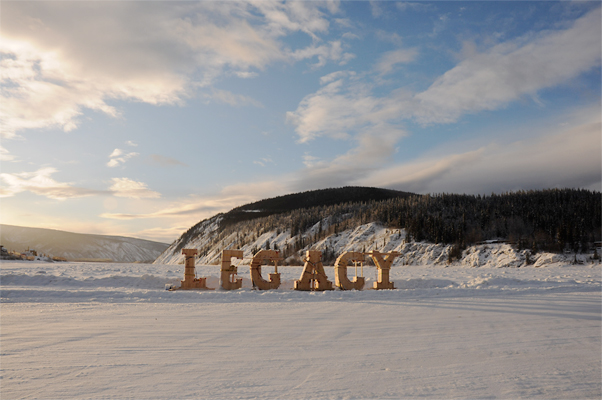
Legacy


Some weeks are simply chock-a-block full. And so it has been this past week which is typically one of the busiest weeks of my year.  It's as though the perfect storm has arrived with the confluence of our annual Senior Tennis Tournament and peak season here in the desert. It means that the yoga studio has many full classes, people visiting from the north seeking to defrost some of the deep winter chill as well as my own personal support role as one of the tennis tournament directors. It translates into rising way before the sun to set-up the tournament check-in desk for the first round matches, then heading off to the studio for my usual teaching schedule. I head back to the tournament during my lunch break to see what help I can offer, eat some lunch and then return to the studio for afternoon classes. Thankfully it's for a limited amount of days which means I can make it happen if I make sure I get enough sleep and intermittent movement. It also happens to be my birthday week, so let's just say I'm in contact with more people in these few days than usual.

With all that's been happening, I got to thinking about what it means to leave a legacy. It was stimulated by week beginning with Martin Luther King, Jr day celebrated here in the States. His energy, movement, and intentions were so powerful, it's now a national holiday. One of Martin Luther King's inspirations came from the non-violent approach to protest by Mahatma Gandhi, the "Father of India". The energy that Gandhi generated, left such a powerful impression, it resulted in impacting a nation on the other side of the globe.

Another person who gifted us with an amazing legacy was the poet, Mary Oliver, who passed away last week. I've read her poems countless times and truly feel as though her words will hold such impact and power for generations. What a legacy she's gifted us with.

And lastly, the legacy-inspired theme is connected to our tennis tournament, the Wilson World Tennis Classic. This is the final year that we'll be running the tournament after 14-years of doing so. The timing seemed right for us to pass the tournament along to a younger, more energetic person, ready to put their stamp on the event that was started over 30-years ago. In a sense, we inherited the tournament from the originators and the timing was perfect for us. Ed was really looking to dig his teeth into something and this presented itself. And I have to say, he's given it his own personal signature and influence over these past several years. It's as though the tournament was "gifted" to us, we added our own influence to it and now we're "gifting" it to who's next. The legacy of the tournament will continue but will morph into a new identity, just as it did with us.

This week has been about honoring what "gifts" we've been given and to reflect on what we've done with that energy. Gandhi morphed a nation and that influenced Martin Luther King, Jr. Mary Oliver crafted her words in a way that will impact us for ages, and the legacy of our tournament will transition to a new expression of its original form. When I think about what I've been gifted with, the first things that come to mind are amazing teachers and athleticism. I was open to receiving and over the years have embodied what I've been given. It's as though my soul knows that to not capitalize on what I been given would be a disservice to my highest self. As I find inspiration I'm often unaware of the exact source from which it comes, but feel beholden to simply open to what is present, to allow my intuition rather than my intellect to be the guide, and pass it along to people I'm face-to-face with each week.

This reflection on legacy also coincided with my birthday and I often wonder if the well of ideas and creativity will ever run dry. But, as I blow out my birthday cake candles, one of my wishes is to find gratitude for all that I've received and to remain humble in their sharing.

Trust and honor your unique gifts. By acknowledging what they are, where they come from, and who can receive them connects us to a chain of energy. It comes from some source, we breathe into it, imprinting our unique selves into that energy, and then eventually let it go. Our legacy is something that will be here even when we are longer walking this earthly plane. Embrace, enjoy, morph, and release!

Saturday, January 19, 2019

Seeking Sattva


One of the many perks of doing what I do is to bear witness to the effects that the practice of yoga can instill in people. This past weekend was a prime example of such an experience as it was the first time I've offered "Self-Care and Healing" as part of our Advanced Studies program. The weekend was in some ways a "staycation" for those who attended, with time spent not only learning what it means to personalize our own self-care but also practicing deep relaxation, restorative yoga with essential oils and self-massage, sound, meditation, and a supportive community. It felt as though the students floated out of the studio on Sunday evening and when I saw many of them on Monday and throughout the week, they still held the glowing residue of the weekend. They had found their way into a state of Sattva, the Sanskrit word that is described as the quality of balance, harmony, goodness, purity, universalizing, holistic, constructive, creative, building, positive attitude, luminous, serenity, being-ness, peaceful, and virtuous.

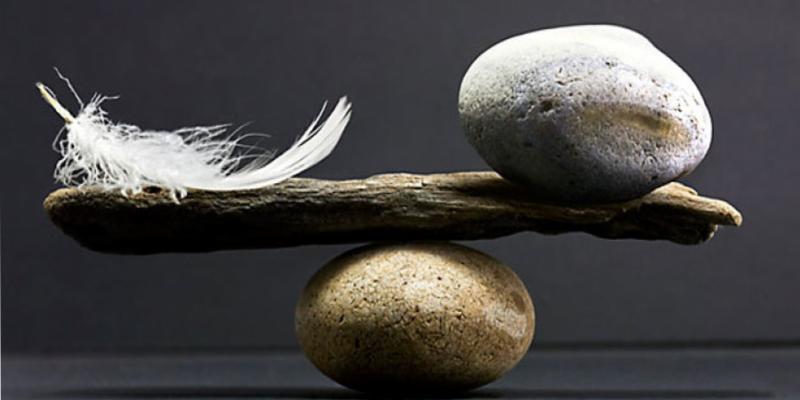
Sattva is one of the three gunas, or "modes of existence" a philosophical and psychological concept developed by the Samkhya school of Hindu philosophy (Wikipedia). The other two qualities are Rajas and Tamas. Rajas is the quality of passion, activity, neither good nor bad and sometimes either, self-centeredness, egoistic, individualizing, driven, moving, and dynamic. It has an energy of movement and action in contrast to Tamas which is the quality of imbalance, disorder, chaos, anxiety, impure, destructive, delusion, negative, dull or inactive, apathy, inertia or lethargy, violent, vicious, and ignorant. When these energies are in balance to each other, we find ourselves in a state of Sattva or peacefulness.

Many people who step onto the mat are seeking a sense of ease and peacefulness in their lives whether it's in a physical, emotional, mental, or spiritual form. Our physical bodies are constantly seeking a relatively stable state of equilibrium, something known as homeostasis. For example, the role of the kidneys in maintaining normal blood pH within normal limits (7.35-7.45), called acid-base homeostasis, is a complex synergy involving three organs (lungs, kidneys, and brain) as well as chemical buffers in blood and blood cells. A disruption to this fine balance can cause illness so, in a sense, we are constantly seeking Sattva even if we aren't aware of doing so.

As we aim to find peacefulness in our lives, it's important to actually know what that feels like. This past weekend's students got a huge dose of that feeling, and when that happens, we also get the sense that we want to feel like this all the time. I didn't want to be the person to burst the bliss bubble, but these states simply don't last because something called life steps in and attempts to throw us off balance. We might get ill or injured and be forced to take some time off to recover, we become more tamasic which might leave us feeling lethargic and grumpy. Or we might have too much on our plate, even if it's in joyful celebration of a life event and find ourselves constantly on the go powered by adrenaline and caffeine...too much Rajas. 

Our practice teaches us to recognize these states of imbalance and offers us tools through yoga, meditation, deep relaxation, and Ayurveda to re-calibrate the imbalance. The more we experience Sattva, the better we get at returning to that state.

So my thought of the week is to check-in with whatever it is you may have too much of and to see what either needs to be brought in or released. The longer we stay connected to the Sattvic experience of life, the nicer we are to others, to the planet and most importantly, to ourselves. We become better self-care givers and, by filling up our own cup, we not only touch into a deep seeded need for self-love but spill it out onto others. I would suggest that you are worth it, so take some time to find Sattva today and every day. You'll not only thank yourself, but others will reap the benefits as well.

Saturday, January 12, 2019

Stumble


Take a moment to think about the first time you stepped onto your yoga mat. At the time, did you know what to expect? Did you have something in mind that the practice might bring to you, or were you like me, sitting on the mat, wondering what it was all about. I had no great plans of what the practice of yoga would offer my life, but something drew me to it and so there I was, sitting with all that I was yet to learn. Now picture yourself in this moment, either reading this or as you're sitting, once again on your mat, and visualize all that has transpired on your mat between the first time you were there and now. As I do this, I am blanketed in a thought of pure astonishment as when I began yoga back in the '90s, I had absolutely no idea that I'd be in a place where I'm constantly living from the perspective of yoga.

My thought of the week is based around the word "stumble" because life isn't always graceful. Yet, if you think about stumbling, it has the connotation of some form of forward momentum. It may not be pretty, but at least it's not stagnant energy. 

All of us are walking our own path in this life, some more consciously than others. One of the gems about stepping onto our yoga mat is that it can be a massive catalyst to look deeply at how we are living and in which direction we're pointed. We experience this on our mats constantly, bumping up against things that challenge us that may feel seemingly out of reach or lacking in clarity as to why we're doing what we're doing. It can be a rocky and disruptive journey sprinkled with moments of ease, yet we keep moving forward being driven from a deeper sense of seeking and curiosity.

This week's theme is one of encouragement for us to take that first step into the unknown such as your first yoga experience. One of my favorite quotes by Patrick Overton encapsulates this idea -  "When you walk to the edge of all the light you have and take that first step into the darkness of the unknown, you must believe that one of two things will happen. There will be something solid for you to stand upon or you will be taught to fly." 

The key is to move forward into what's next, even if you don't have the perfect plan or all the details figured out. The symbolism of the lotus is one of moving through the muck and mire of life, just as the lotus flower is anchored in the bottom of a muddy pond. The water is murky yet despite not knowing exactly where it's going, the lotus bud makes its way toward the surface where it can blossom in all its radiance. As my teacher, Judith Hanson Lasater, says, "May we live like the lotus, at peace in muddied waters".

Our lives are much like that. When we first begin something we often aren't very good at it. I look back to when I first taught group exercise in the '80s and cringe at what I brought to the class. I was a pure aerobics neophyte, stumbling through an hour of huffing and puffing, calf muscles and vocal cords on fire, and then collecting a whopping $15-$25 for my efforts. Thankfully, I didn't know enough to become discouraged and now, some 37 years later and having thousands of classes under my belt, I've gotten quite skilled at teaching to groups. But in the beginning, I was in the muddied waters of not knowing, yet something kept driving me to the surface...toward the light.

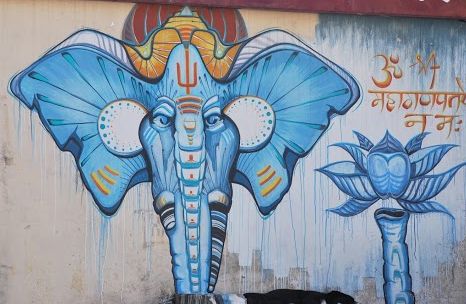
Often in the yoga world, when we feel we're blocked or have many obstacles sitting in front of us, we invoke the energy and vibration of the Hindu deity, Ganesha, the beloved elephant-headed god. Ganesha is the "remover of obstacles" and we chant the mantra Om Gum Ganapatayei Namaha in order to ignite his energy of opening up our pathway. I have the image of walking behind an elephant, swinging his trunk from side-to-side clearing the way for me to move forward with ease. It's useful at the beginning of new ventures such as opening a business, moving or selling your house, at the start of a new relationship, or when traveling. We connect to the energy to move beyond stagnation in order for things to unfold at the time and speed they are meant to be.

As you sit on your mat, take a moment to acknowledge all that has brought you to this particular point in time. Then, visualize that the mat stretching out in front of you is infinitely long. I imagine that my yoga practice will come to its conclusion, that I'll reach the end of the mat when my final exhale breath leaves my body. Until then...so much magic awaits!

Saturday, January 5, 2019

Ex-pire


My work week began on the last day of 2018. Many people came to class for their final yoga session of the year, ready to ring in the New Year from a calmer and more centered perspective. To come full circle, my thought of the week was to balance out last week's theme to "inspire" with the dual meaning of, not only breathing in, but igniting the seed of inspiration sitting at the center of our hearts. Last week our focus was on breathing life into something that was deeply motivating, the intention of what is yet to manifest. Understanding that opposites are constant companions in life, it felt natural to have this week's focus on the word "ex-pire" meaning both "to come to an end" as well as "to breathe out", often referring to our final breath.

If we think about the unending cycle of the breath, the very first breath we take upon entering the world is an inhalation (often followed by a loud cry) and as we are passing out of our body, the final breath is an exhaling one. It's interesting to think that an inhale and exhale breath bookend our entire lives, with the breath cycle continuing until that final breath stops it. We can travel through most of our lives and never pay any attention to what's happening with our breath as it's simply an automatic function that keeps us alive. Just as our hearts beat without us thinking about it, we can breathe pretty much the same way. We get to know the breath through not only our yoga practice but in other ways such as singing, doing cardiovascular exercise (especially swimming), or if we get the wind knocked out of us!

The exhaling breath is the breath of release and letting go. Just as we inhale in order to bring to life an idea, a moment, or simply to be, we exhale to let it all go. Understanding that the balance between these two things can be deeply profound in teaching us about being in the moment and how nothing is permanent. Think about the myriad of things you have created in your life, things that you've given energy and commitment to, and to which you are no longer involved doing...you've since let go of them. With all that we give energy to and build in our lives, ultimately we surrender it, including our actual physical selves.

It seems that the turning of the calendar is a trigger for looking a bit deeper and this week I'm asking the question of what you're ready to let go of. Perhaps your 2018 was one with challenges and loss, perhaps people you've loved, businesses you've built, friendships you've had, have come to the end of their cycle.  Perhaps, this is the perfect time for clearly releasing them, for sending them back out into the universal energetic grid. When I visualize letting go, I see whatever it may be riding out on my breath...like a miniature surfer catching that perfect wave, or placing it into a bubble within me and as I breathe out, it sails out of me and is released.

In yoga, we create more space for self-awareness, turning our focus inward and into the now moment. We do this by letting go of expectations, judgment, and competition with ourselves or our fellow yogis. We practice letting go of what no longer serves us. Recently, I've been working on letting go of trying to control things and self-judgment. It's tough as I want things a particular way and I have self-imposed measures of what I "should" be doing, so letting go is a continuous part of my personal practice. It's gotten easier over time, but something always seems to step forward once I've let something else go. And I guess that's the beauty of the process. When we let go and say goodbye to one thing, we open the space for the next thing. I have gotten better to not stuff something immediately into the open space, but to spend some time enjoying it until that next thing reveals itself and feels right and good.

I wish for you in this New Year that you're able to let go of the old and familiar and step into the open expanse of what's next. Take a deep breath in and then...let it go!